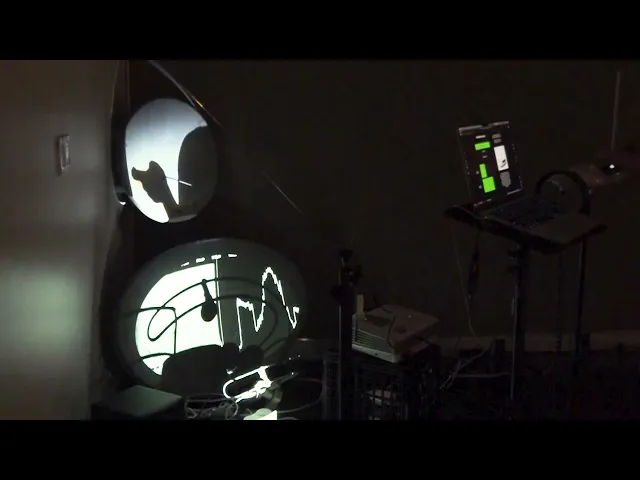
'When Satellites Murmur' MFA Thesis Project (2025)
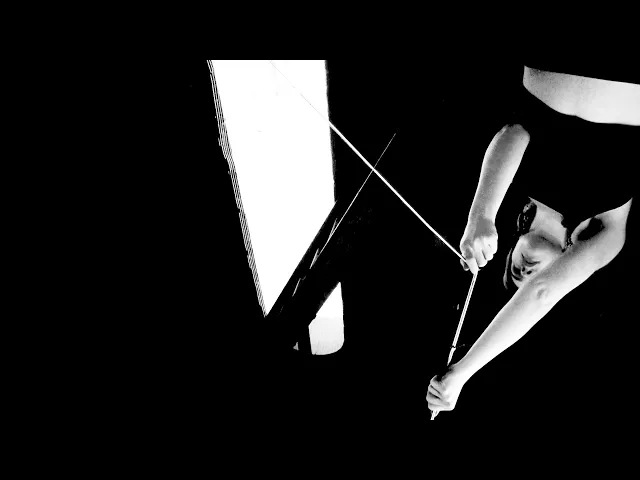
is an ode to murmuration. The result of sonic experimentation between satellites, starlings, theremins, and (east importantly humans. Murmuration as the sound made by thousands of starlings flapping their wings in unison, but more widely defined as the utterance of a low and continuous sound. Murmuration represents the ephemeral and at times incomprehensible channels of nonhuman vocalization. The work translates and modulates real-time and prerecorded signals between satellites and theremins, positioning their antennas not as passive receivers but as active listeners and instruments.
This is the project's website including the research, process, and final documentation, that I coded using javascript, CSS, and HTML. Have a browse or click this link to open the website in a new tab.
This is my Design and Technology MFA thesis project from Parsons School of Design. I was exploring posthumanism and electronic composition. I studied sound ecologies at the Institute for Postnatural Studies, learnt how to pick up satellite signals from Open Weather's DIY Satellite Ground Station Toolkit, and learnt the theremin through a NYC Theremin Society workshop.
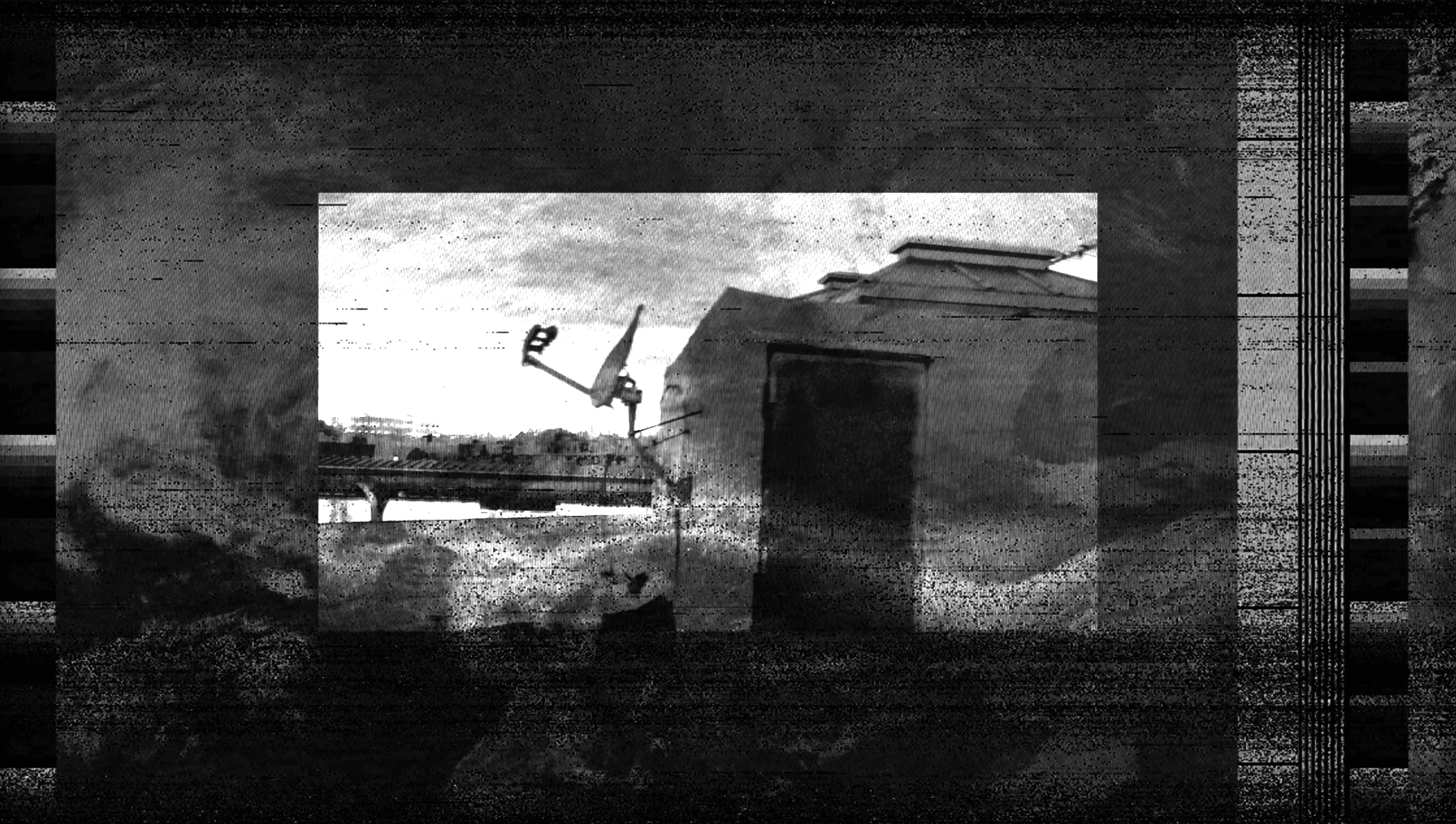
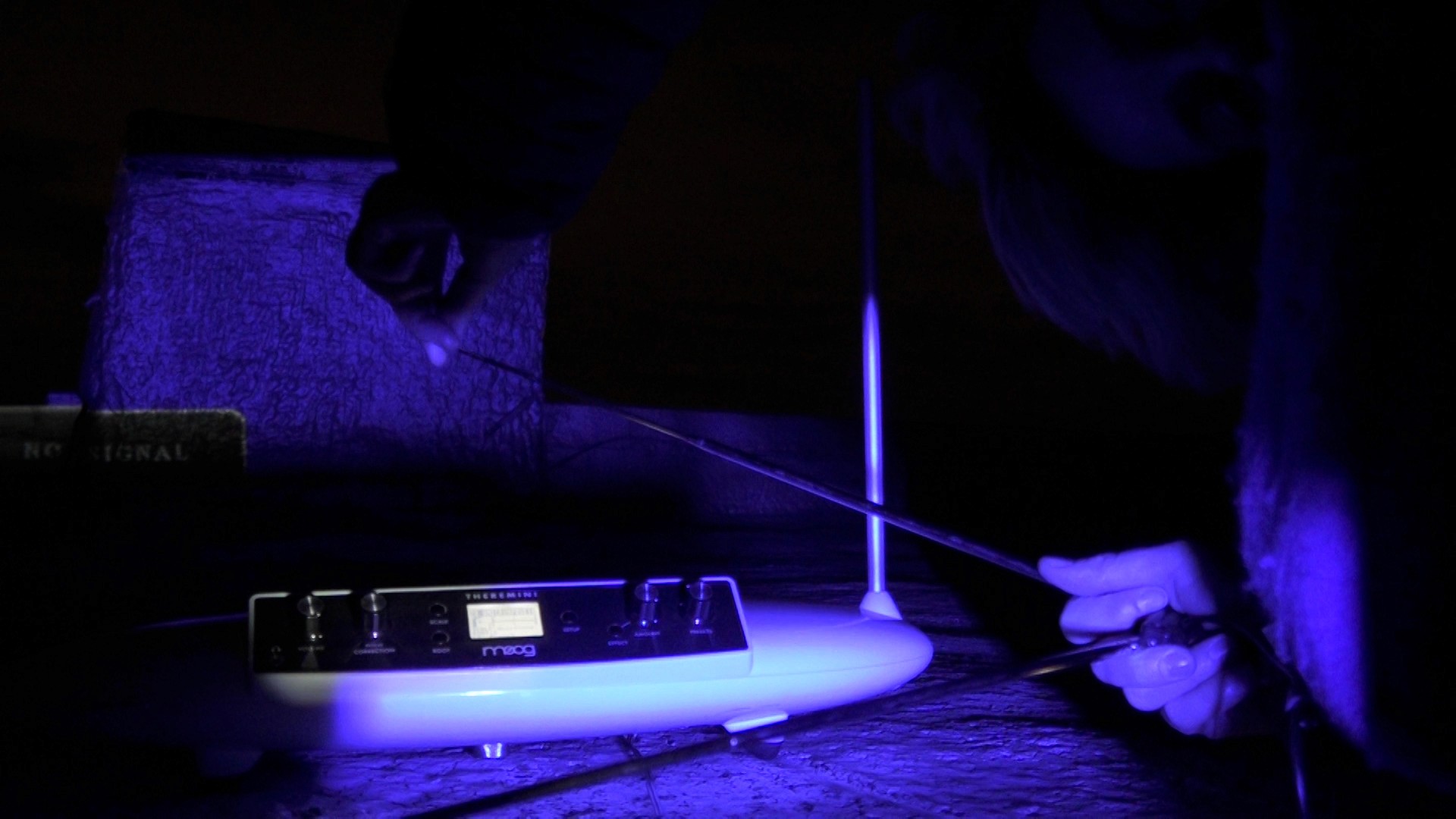
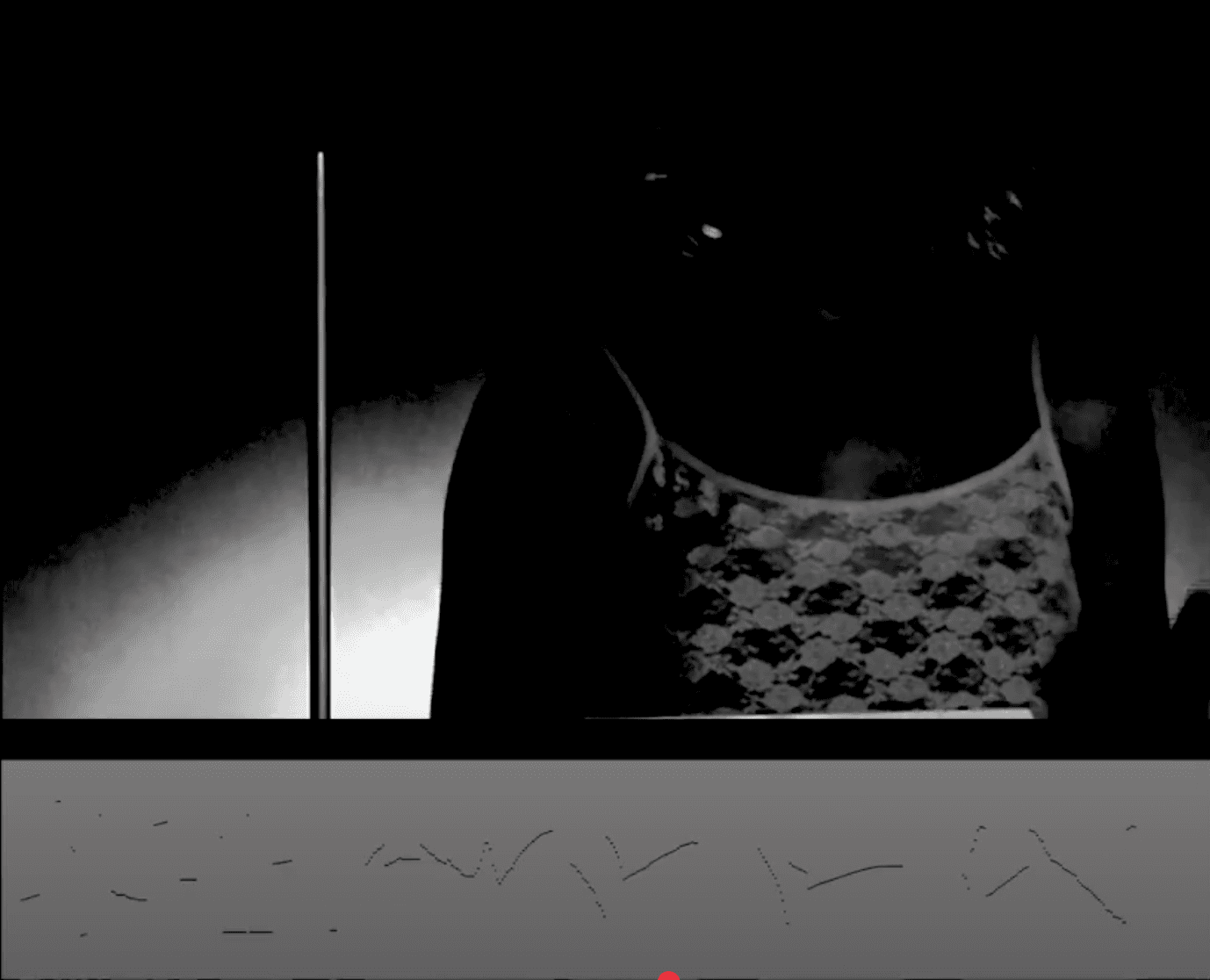
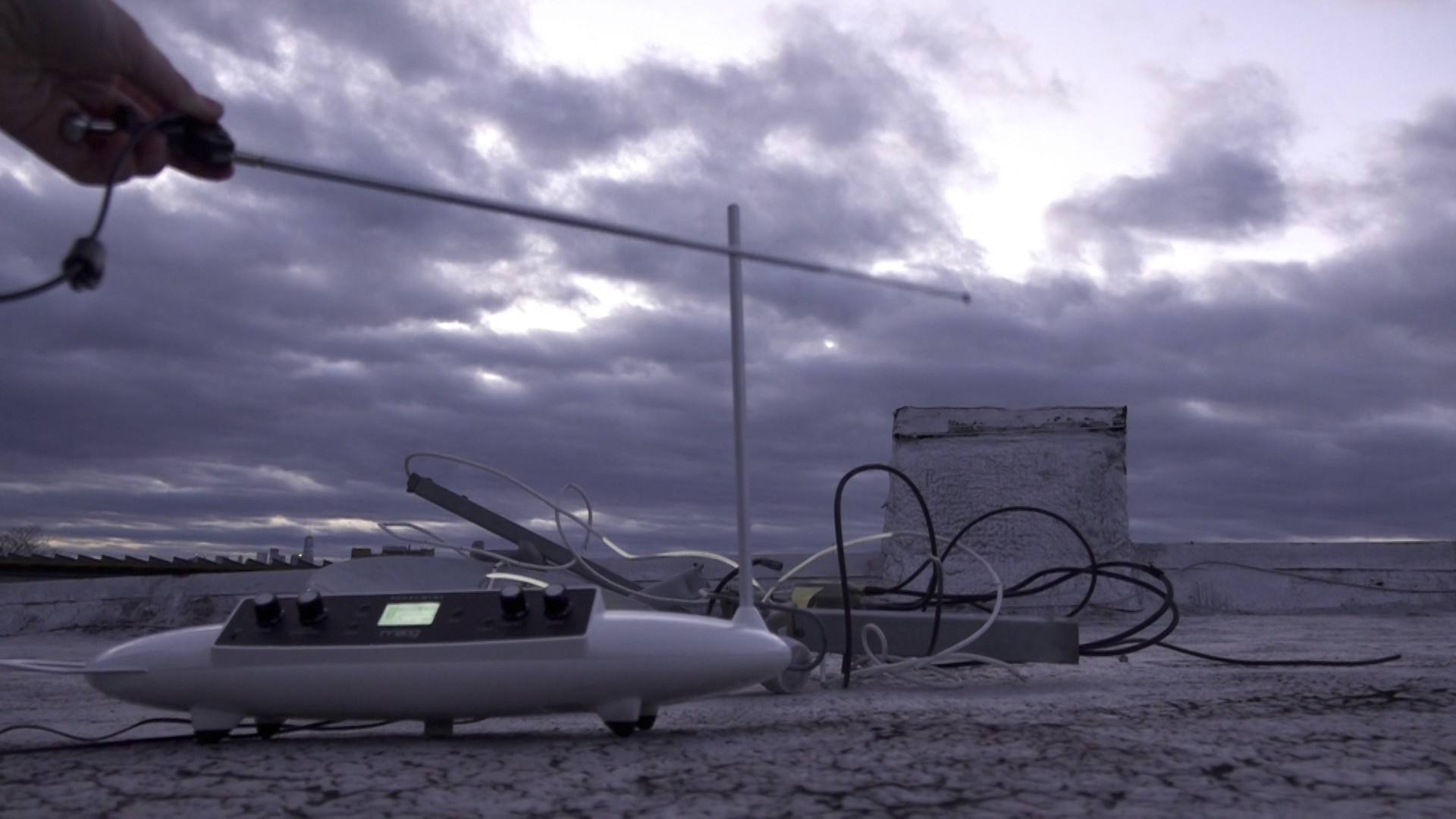
The film below is an experimental short about my attempt to pick up a NOAA satellite signal from my NYC rooftop, to enter an eerie and ephemeral portal of nonhuman communication. The outcome is a sonic network of satellite signal beeps, starling murmurations, shortwave radio waves, and theremin oscillations.
The film draws parallels between the avian and technological networks that inhabit our skies - starlings murmur like TV static whilst satellites orbit like swarms. The soundscape is mediated by my process of picking up and modulating real-time and prerecorded signals, transforming antennas from passive receivers into instruments that play the ephemeral sounds of our aerial networks.
The sound for this film was made using CubicSDR, MaxMSP, and a Moog Theremin.
Murmuration footage taken from Adobe Stock.
For the Parsons Design and Technology Thesis Show, I set up an audiovisual installation using two defunct satellite dishes, two projectors, a theremin as a midi controller, a dipole antenna connected to CubicSDR for live shortwave radio and Max MSP for audio modulation. The video below shows the setup.
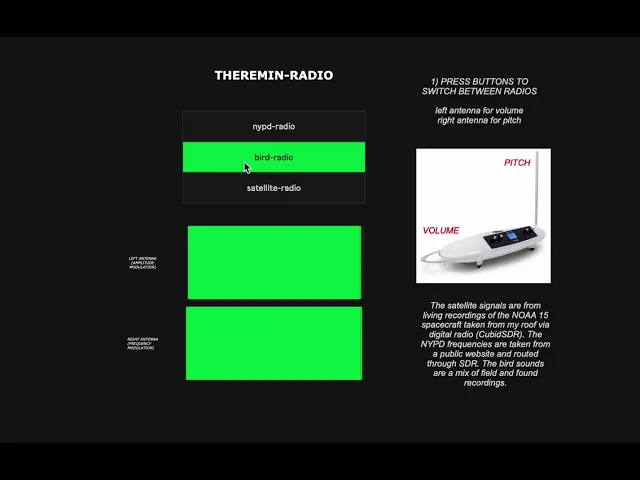
As part of the setup, using MaxMSP I created a three channel 'radio' that switched between birdsong recordings, live NYPD feed (via Cubic SDR using Radio Reference open source data), and satellite beeps (pre-recorded on CubicSDR using an RTL-2 dongle and antenna). The radio is theremin-controlled so the amplitude and pitch/frequency are controlled by your left and right hands over the two antennas. This 'radio' is very much a prototype and I would like to develop it to be more live-reactive and have more senstitive parameters, particularly with the NYPD radio which often came out as muffled or static.
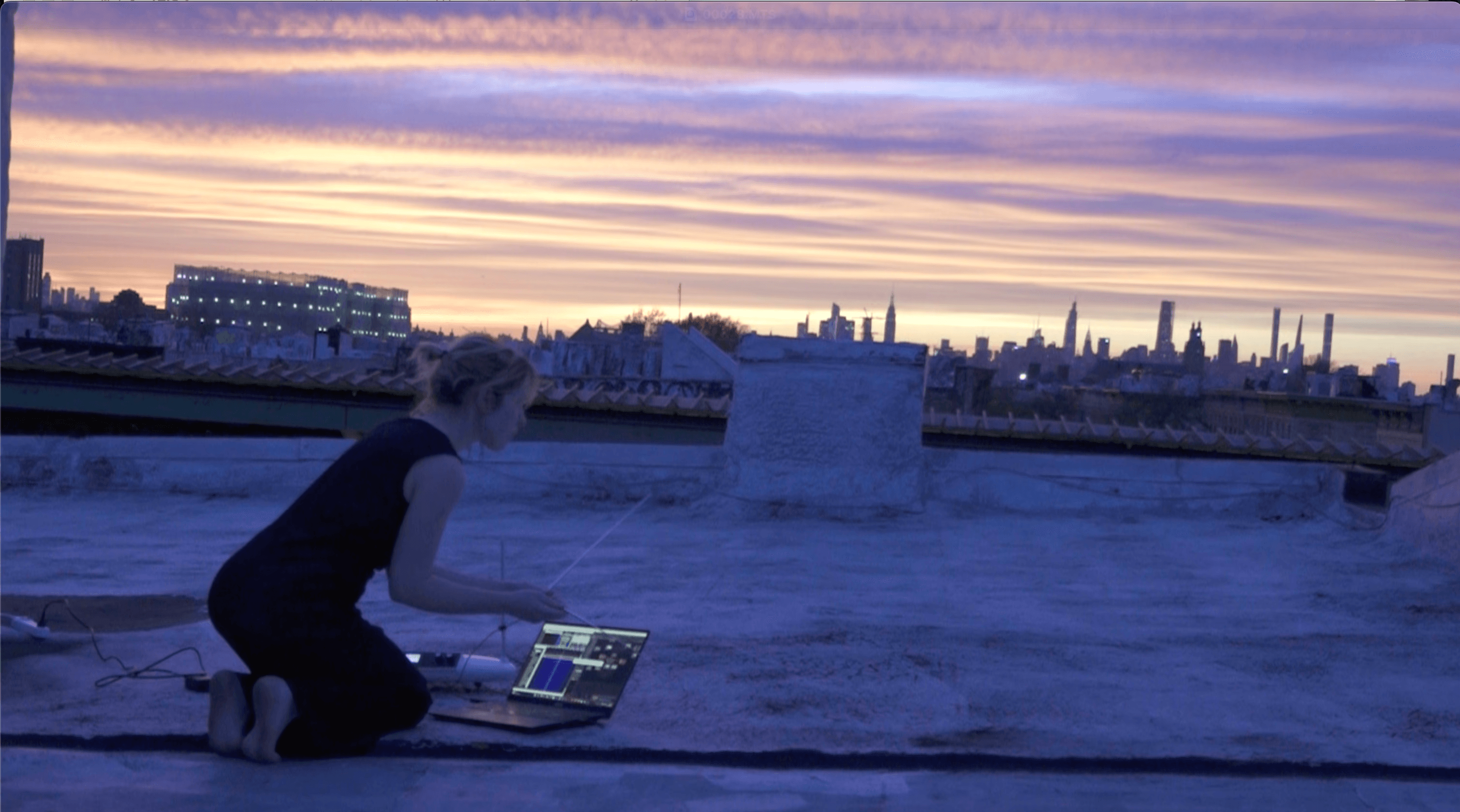
"Maia Appleby Melamed and Eliot Lambert take us on a deep dive into the electromagnetic world of the theremin - from its origins as a Soviet science experiment to its use as an instrument where the body is the interface. We explore the instrument’s political history, which includes Cold War espionage and Soviet labour camps. The theremin's power as a 'deep listening instrument', used even to broadcast humanity's first interstellar musical message into space, makes it both a relic of the past and a portal to the future. As this year marks the 20th anniversary of the New York Theremin Society, the show demonstrates why the instrument remains so fascinating today, with an interview from one of the society's co-founders and renowned thereminist Dorit Chrysler."
I co-produced and featured on this episode exploring the weird and wonderful history of the theremin, inspired by my thesis project 'When Satellites Murmur' which led to my acquiring of a theremin and both playing it and using it as a midi controller.
The Theremin: Past, Present and Future, Resonance Radio
"There's a profound sadness to the theremin, in that wavering effect that sounds like a human voice perpetually on the edge of breaking, just before tears. That sadness is haunting and beautiful and primordial. The sound is both intensely human and more-than-human - sometimes it sounds like an ancient ghost trapped in the machine. And other times, it sounds like the voice of the future, a reflection of the cyborgization of the human voice as technology increasingly dominates our lives …. Perhaps the ancient and future voice are the two electromagnetic fields, and your present body is the interference that creates the sound. So it’s an instrument, a time capsule, and a portal into the ethereal." - excerpt from my feature